Tools and providers
Part of Startup PR agency selection for UK founders
Startup PR agency selection for UK founders
A UK founder's guide to startup PR agency selection: funding-stage fit, briefs, contracts, data protection and illustrative project and retainer figures.
What to take away
- Stage beats size. A pre-seed company usually needs a fixed launch project, while a Series A business can carry a monthly retainer.
- Ask which journalists the team briefed in your sector last year, and which titles covered a named competitor.
- Judge a proposal by the event it is built around, not by the logos on the closing slide.
- Budget the founder's own hours for briefings, approvals and draft reviews.
- Settle data protection and intellectual property terms before work starts.
Why startup PR is a different job
Startup PR is built on a handful of dated events: a funding round, a product launch, a senior hire, a regulatory milestone. Between them there is often nothing to announce.
An agency that promises monthly coverage will either pad the calendar with thin stories or go quiet and invoice anyway.
Corporate teams work to longer cycles and wider stakeholder sets. That mismatch shows in week one, when you are asked for a messaging document that does not exist.
Matching the agency to your funding stage
Early stage PR agency work is usually project-shaped. Pre-seed and seed companies buy a launch package: positioning, a press kit, a short media list and one push around a single event.
PR buying by funding stage
Pre-seed
- What you buy
- First proof
- Typical shape
- Fixed launch project
- Media focus
- Launch push
Seed
- What you buy
- Sector credibility
- Typical shape
- Project then retainer
- Media focus
- Trade press
Series A
- What you buy
- Sustained profile
- Typical shape
- Monthly retainer
- Media focus
- Analysts and nationals
A retainer makes sense once you have a repeatable release rhythm and something to sustain. Before that, you are paying for capacity you cannot fill.
What you are buying
- Pre-seed
- First proof the product works
- Seed
- Sector credibility with trade press
- Series A
- Sustained profile and analyst contact
Typical shape
- Pre-seed
- One fixed launch project
- Seed
- A project, then a short retainer
- Series A
- Monthly retainer
At Series A and beyond, questions shift to analyst relations, trade press and whether the agency can hold a line with national business desks.
A five-step selection sequence
- Name the single event you want covered in the next six months, with a date.
- Ask three agencies to plan that event only, priced as a fixed project.
- Ask each to name two journalists it has briefed in your sector this year.
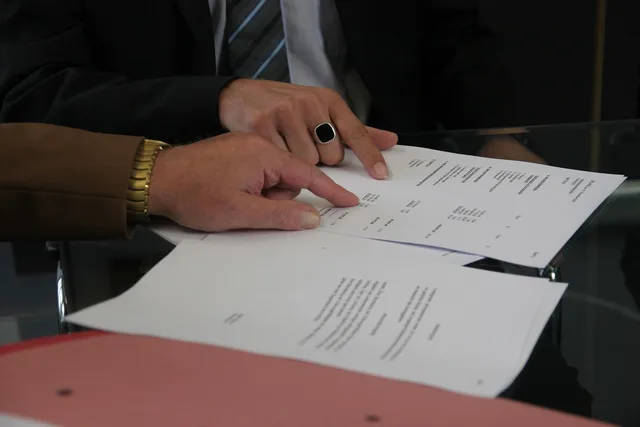
- Read the draft contract, including the notice period and asset ownership.
- Run a paid 30-day trial before converting to a retainer.
Names to put on your research list
Possible UK-facing agencies to investigate include Ballou, Words + Pixels and Third City. Treat these as starting points, not endorsements: ask each for recent startup work in your sector and examples of coverage it has secured.
Use titles such as Sifted, UKTN and Tech.eu as benchmarks when asking which journalists an agency has briefed. Ask for the journalist names and the context of the work, rather than relying on a list of outlet logos.
What a startup PR brief should contain
A workable brief states the audience, the news hook, the spokesperson, the approval route and the measures you will read. Anything the agency cannot verify, it should not claim.
Handle the claim risk early. Any performance statement in a release or a social post falls under the CAP code, and an unevidenced claim is a liability.
A structured route to brief a PR agency keeps the document to two pages, which is about all a founder will reread before the call.
How funding cycles shape the calendar
Seed announcements often cluster around a funding close, and the Enterprise Investment Scheme sits behind many UK rounds. HMRC conditions cover company age, size and trade, so the announcement date and the tax paperwork rarely move together.
GOV.UK's finance and support for your business page lists grant and loan schemes, and it is worth a look before you set a PR budget that assumes a round closes on schedule.
Examples to check include the government-backed Start Up Loans programme and Innovate UK funding competitions. Check current eligibility and availability before relying on either as a funding date or PR-budget assumption.
Accelerator demo days in London, Manchester and Edinburgh push many announcements into the same fortnight, which raises the bar for news.
For named programmes to monitor, check the event calendars for Seedcamp and Techstars London. Ask an agency how it would distinguish your announcement when other startup news is competing for attention.
Costs, contracts and what you actually buy
On an illustrative basis only, a launch project might be quoted at £5,000 to £12,000, and a monthly retainer at £3,000 to £8,000. Treat those as modelling figures rather than a market rate.
If the agency holds your media list or journalist contacts, it processes personal data for you. The ICO's UK GDPR guidance and resources set out what a processor agreement has to cover.
PR agency contract terms settle notice periods and asset ownership, and they are easier to negotiate before the first invoice arrives.
There is no single PR-specific contract template for every engagement. If an agency processes personal data for you, the written processor terms should meet UK GDPR Article 28 requirements; the ICO guidance explains what those terms cover. For conduct checks, consult the PRCA Code of Conduct and the CIPR Code of Conduct, bearing in mind that membership is not a substitute for checking the contract and references.
Common questions
Do UK startups need a PR agency before launch?
Most do not. A founder-led approach, with a clear story and a short journalist list, usually carries a pre-launch company; agencies earn their fee once there is a dated event to push.
What does a startup PR agency cost in the UK?
For planning, the illustrative ranges in this guide are £5,000–£12,000 for a launch project and £3,000–£8,000 a month for a retainer. They are modelling figures, not a verified UK market rate or a quote; ask agencies for itemised, comparable proposals.
Should we hire an early stage PR agency or a freelancer?
A freelancer may suit one event and a tight budget; an agency may suit a company running several workstreams at once. YunoJuno, Malt and PeoplePerHour are marketplaces to search for freelancers; check relevant experience and references before hiring.
When should a UK startup start PR work?
Start six to eight weeks before the event you want covered, so there is time to agree messages and build a media list. Starting afterwards means you are reporting history.